
Landlord Blog
Education and news for smart DIY landlords!
Urban vs Suburban: Choosing the Right San Diego Neighborhood for Your Lifestyle
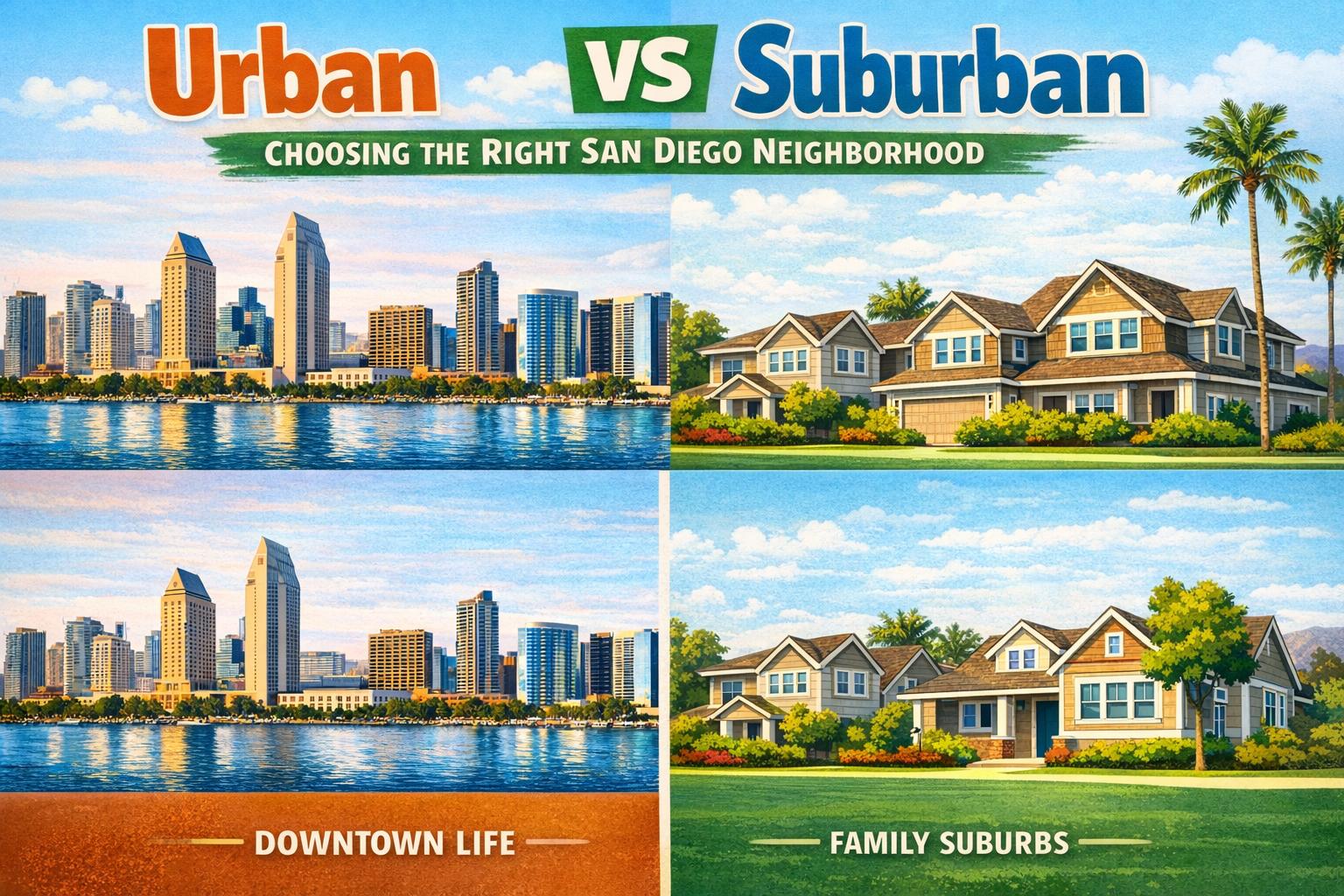
San Diego offers something rare: you can surf in the morning, hike in the afternoon, and still make it to a rooftop dinner downtown by sunset. But where you choose to live will shape your daily rhythm more than anything else. The decision between urban and suburban neighborhoods isn’t just about price or square footage. It’s about lifestyle.
Here’s how to think it through.
The Energy of Urban Living
If you’re drawn to walkability, nightlife, and constant activity, urban San Diego might feel like home. Areas like Downtown, Little Italy, North Park, and Hillcrest offer high-rise condos, historic apartments, trendy cafés, and a steady calendar of events.
Living in these neighborhoods often means you can walk to restaurants, bars, fitness studios, and even work. Public transportation and bike-friendly streets make commuting manageable without relying entirely on a car. For young professionals, creatives, and anyone who enjoys being in the middle of things, the energy can be motivating.
However, urban living usually comes with trade-offs. You may have less space, limited parking, and higher price-per-square-foot costs. Noise is part of the package. Street festivals, nightlife, and traffic don’t turn off at 9 p.m.
If convenience and culture matter more to you than a large backyard, urban San Diego delivers.
The Appeal of Suburban Comfort
On the other side, suburban neighborhoods like Carmel Valley, Rancho Bernardo, Scripps Ranch, and parts of Chula Vista offer more space and a quieter pace. Single-family homes, good-sized yards, and access to top-rated schools make these areas especially appealing to families.
Suburban communities often feel more residential and relaxed. Streets are less crowded, parking is easier, and homes typically offer more square footage for the price compared to central neighborhoods. Many suburban areas also have strong community amenities, such as parks, recreation centers, and neighborhood events.
The trade-off? You’ll likely rely on a car for most errands and commutes. Dining and nightlife options may require a drive rather than a short walk. If you thrive on spontaneous city life, the quieter environment could feel limiting.
Cost Considerations in 2026
San Diego remains one of the most competitive housing markets in California. Urban condos can offer a lower entry price than single-family suburban homes, but homeowners association fees can add to monthly costs. Suburban homes may come with higher purchase prices but offer more long-term flexibility if you need extra space.
Commute time is another factor. If you work downtown but live in North County suburbs, traffic can become a daily stress point. On the other hand, remote work has made suburban living more practical for many professionals.
Think Beyond the Home
When choosing between urban and suburban, focus less on the property itself and more on your daily routine. Do you want to walk to your favorite coffee shop? Is a backyard for kids or pets non-negotiable? How important is proximity to the beach, hiking trails, or your workplace?
San Diego is unique in that you don’t have to sacrifice outdoor access in either setting. Beaches, parks, and trails are woven throughout the region.
Final Thoughts
There’s no universally “better” choice between urban and suburban San Diego. The right neighborhood is the one that aligns with how you actually live, not how you imagine you might live someday.
Spend time in both types of areas. Visit at different times of day. Picture your weekday routine, not just your weekend plans. When your environment matches your lifestyle, everything else tends to fall into place.
Discover more related articles below:
- How to Find a Home That Fits Your Life, Not Your Wishlist
- Mortgage Tips Every First-Time Homebuyer Should Know
- Why Flexibility Is the Key to Your First Home Purchase
- How to Match Your Lifestyle with the Right Rental Location